
LEGO Is Becoming a Software Company — Without Giving Up the Brick

The LEGO Group’s first-half 2026 results were strong enough to grab headlines on their own: revenue rose 21% year over year to DKK 41.9 billion, consumer sales increased 22%, and operating profit climbed 22% to DKK 10.9 billion. But the more interesting story may be what the company is doing behind those numbers.
According to the Financial Times, LEGO has tripled its software engineering workforce. At the same time, the company is building more technology directly into physical products. SMART Play is the most visible example so far.
Why does a toy company need so many software engineers?
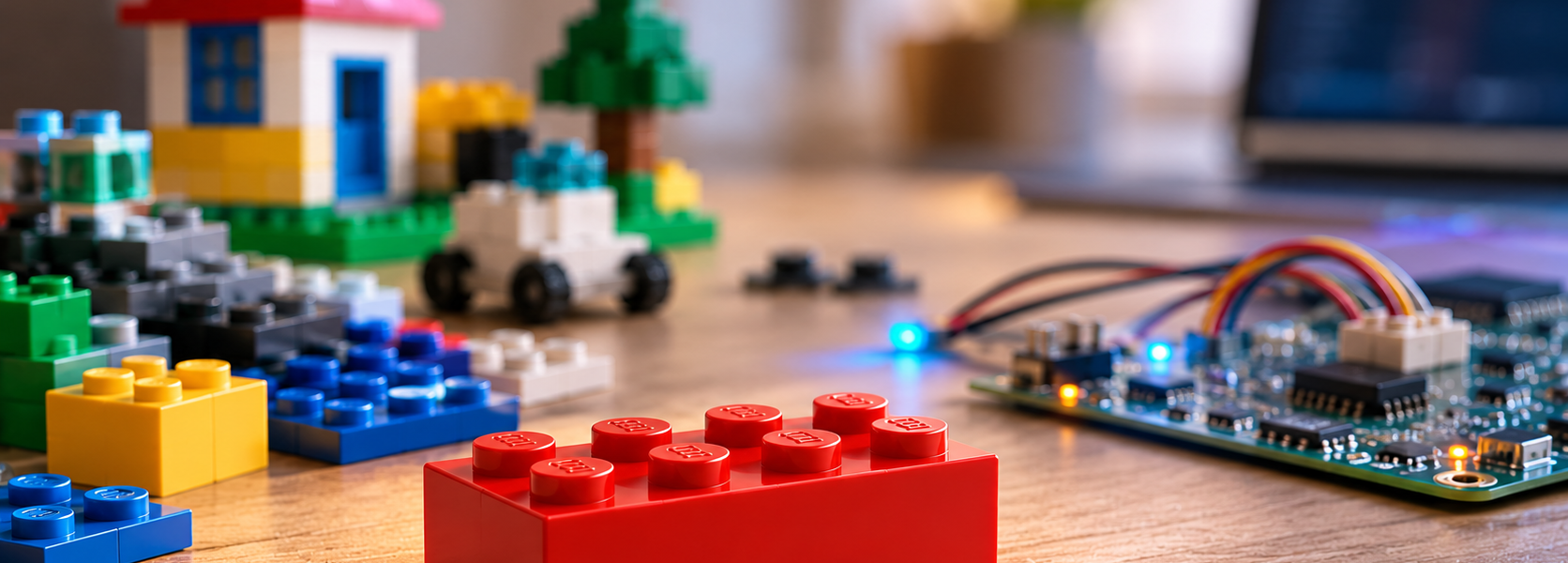
LEGO is still a toy company, and there is no indication that the physical brick is becoming less important. What is changing is the amount of technology that can sit around — and increasingly inside — the traditional building system.
The company’s H1 2026 results show that it has plenty of capacity to keep investing. LEGO launched more than 330 new products in the first six months of the year, continued expanding manufacturing capacity, and maintained heavy spending on strategic initiatives. In its official results, the company described SMART Play as a significant evolution of the LEGO System in Play.
That framing matters. SMART Play is not being positioned as a side gadget or a one-off experiment. It is being built as another layer of the wider LEGO play system.
SMART Play shows where the technology investment is going
The SMART Play platform combines SMART Brick, SMART Tags and SMART Minifigures. The smart brick can react to movement and orientation, detect parts of its environment, produce light and sound, and respond to compatible tags and minifigures.
Just as importantly, LEGO is presenting the system as a screen-free play experience. That creates an unusual dynamic: more software does not necessarily mean more app time. The software is there to make the physical model react, rather than to pull the player away from it.
SMART Play is already used in LEGO Star Wars and LEGO Pokémon. LEGO’s own materials also make clear that this is intended to be an evolving platform, with the potential for future updates and additional products.
Eight years of development behind one smart brick
The technology behind SMART Play has been in development far longer than the final product might suggest. Tom Donaldson, who leads the project at LEGO, told IT Brew that the journey from concept to launch took roughly eight years.
The work sits within LEGO’s Creative Play Lab, an R&D organization focused on technologies for physical products. Its capabilities include electronics, hardware and mechatronics, while the project has also had to account for software security, communications security and device integrity.
That makes SMART Play more than an outsourced electronics experiment. It reflects a broader in-house capability that LEGO can reuse and expand across future products.
LEGO is not turning into an electronics brand
It would be easy to overstate the shift. LEGO’s biggest-selling themes in the first half of 2026 still included Speed Champions, Botanicals, Technic, Icons and Star Wars. The overwhelming majority of the portfolio remains rooted in classic physical building.
Technology therefore looks more like an optional layer than a replacement for the core product. That also matches LEGO’s own messaging: SMART Play is designed to work with the existing System in Play, not to supersede it.
Star Wars and Pokémon may only be the beginning
For now, SMART Play is attached to two globally recognizable franchises: Star Wars and Pokémon. Both provide a natural testing ground for responsive lights, sounds and character-driven interactions.
What comes next is still unknown. LEGO has not published a confirmed roadmap of future themes, so predicting which lines will get SMART Play would be speculation.
What is already clear is that software has become a much more serious part of LEGO’s product strategy, and SMART Play is one of the first places where consumers can see that shift directly.
So is LEGO becoming a technology company?
Not in the same sense as Apple, Google or a consumer electronics manufacturer. LEGO’s business is still built around physical sets, and the strength of traditional building products remains central to its growth.
But the boundary between toy company and technology company is becoming less obvious. When a manufacturer triples its software engineering capacity, maintains in-house electronics and mechatronics expertise, and develops a hardware-software platform that lives inside its core product, technology is no longer just supporting the website, the app or the supply chain.
It is becoming part of the brick itself.