
Is Price per Piece Still a Useful Way to Judge LEGO Value in 2026?

LEGO fans have used price per piece for years because it is simple: divide the set price by the number of elements. For two similar products, that can be a useful first comparison.
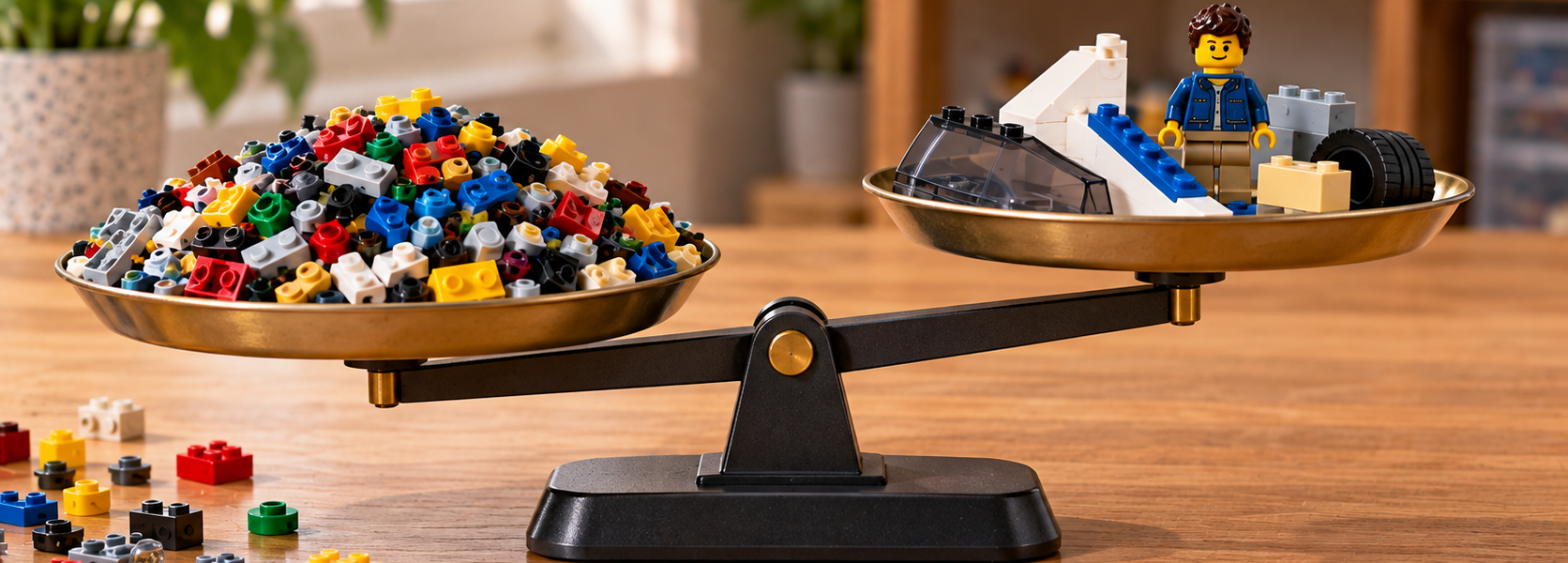
The problem is that not all elements carry the same material cost, function, size, or collector value. A set with 1,000 tiny pieces is not automatically better value than one with 700 larger or more specialized parts.
Why price per piece remains useful
The metric is quick, easy to calculate, and widely understood. It works reasonably well when comparing sets from the same theme, similar scale, and similar product type.
It is especially useful for spotting outliers: if two closely related sets offer similar construction and features but one is dramatically more expensive per piece, that difference is worth investigating.
Piece count hides size differences
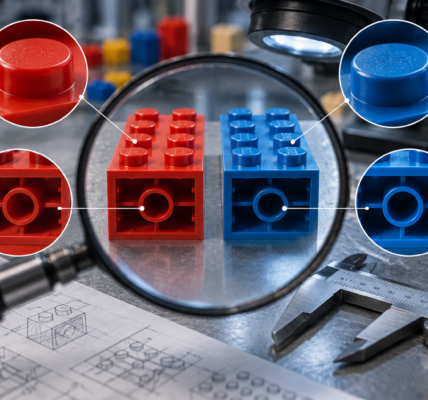
A LEGO element can be anything from a tiny pin or tile to a large molded panel, wheel, canopy, track section, or structural component. Piece count treats them all as one unit.
That means two sets with the same number of elements can contain very different amounts of plastic and very different kinds of tooling.
Electronics distort the metric even more
Motors, hubs, lights, battery components, and other electronic systems add cost without adding hundreds of ordinary pieces. A powered Technic set can therefore look poor under a simple price-per-piece calculation while offering functions a non-powered model cannot match.
Minifigures and exclusive parts matter
For licensed themes and collector-oriented sets, minifigures can materially affect perceived value. Exclusive prints, unique molds, accessories, and characters may be important to buyers even though they contribute very little to total piece count.
The same applies to unusual printed elements and specialized parts that appear in only a small number of sets.
Licensing and product positioning also affect price
Licensed products can be priced differently from non-licensed sets, while display-focused models may emphasize scale, design, finish, and presentation rather than raw element count. Adult-targeted sets can also include packaging and product-positioning choices that make a simple cents-per-piece comparison less informative.
When price per piece works best
The metric is most useful when comparing:
- sets from the same theme,
- models of similar size and purpose,
- products with similar minifigure counts,
- sets without major differences in electronics or large specialized parts.
Outside those conditions, the number should be treated cautiously.
A better five-factor value check
- Price relative to comparable sets.
- Element profile. Are there large, specialized, or electronic components?
- Minifigures and exclusives.
- Functions and build experience.
- Real market price. MSRP is not always what buyers actually pay.
MSRP is not always the real buying price
A set can look expensive at launch and become much more competitive once retailers discount it. For that reason, price per piece based only on MSRP can stop reflecting the market fairly.
For buying guides and comparisons, it is often more useful to calculate the metric both at MSRP and at a representative current street price where reliable data is available.
There is no universal good threshold
Rules such as “anything under 10 cents per piece is good value” are too broad to apply across all themes, regions, and product types. A threshold that looks sensible for a basic brick-built set may be meaningless for a motorized Technic model or a minifigure-heavy licensed release.
The key takeaway
Price per piece still has value in 2026, but only as one signal. It is strongest when comparing like with like. The more two products differ in part size, electronics, minifigures, licensing, or function, the less useful the raw number becomes.
A better judgement combines price, contents, function, exclusivity, and actual market availability rather than relying on one ratio.