
LEGO Is Investing More Than $400 Million in Mexico. Why Monterrey Matters to the Americas Supply Chain

The LEGO Group announced on September 24, 2026 that it will invest more than US$400 million in another expansion of its Monterrey manufacturing site in Mexico. The project adds around 62,000 square metres of built-up area, including a new packing hall and a fully automated high-bay warehouse. According to the company, the expansion will increase total site capacity by 35% and create around 1,300 additional jobs. Construction is expected to begin in early 2027 and be completed by 2029.
On its own, that is a major industrial investment. But Monterrey matters for a broader reason. It is not simply another LEGO factory. It is already the company’s largest manufacturing site and one of the central pieces of its Americas production network.
LEGO’s largest manufacturing site
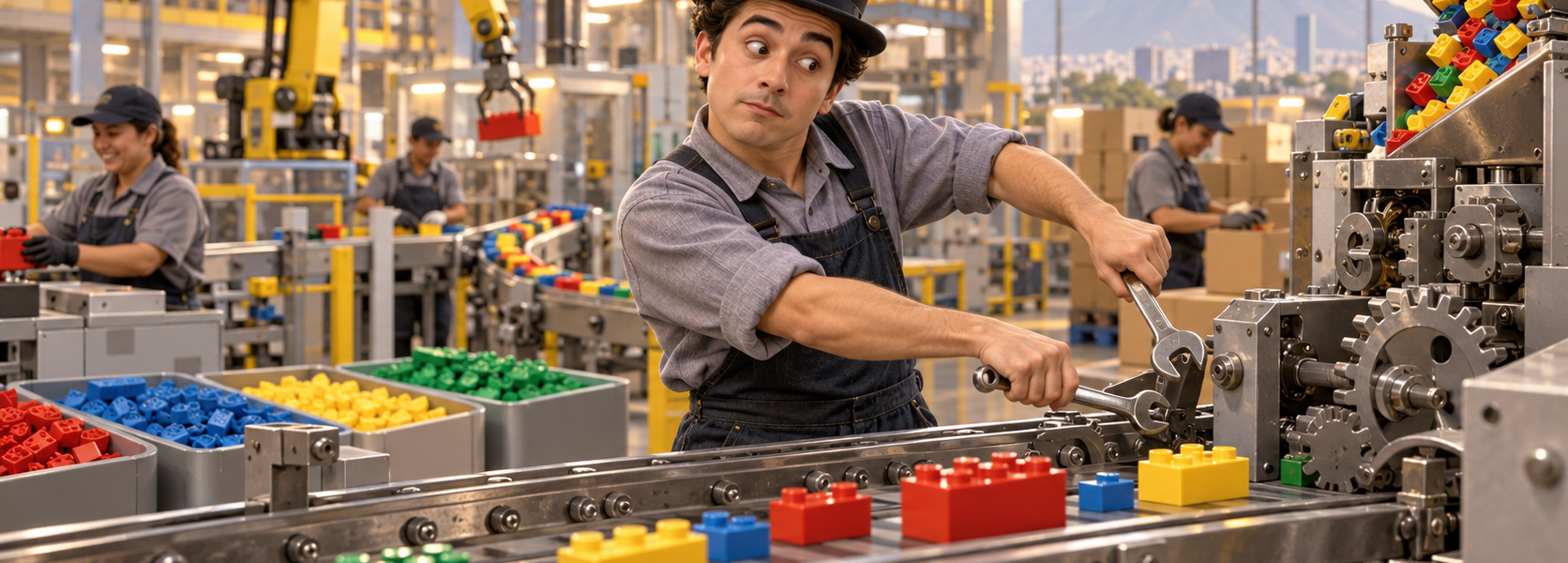
The Monterrey factory has operated since 2008. According to the latest announcement, it currently employs around 7,300 people, and the site produced more than 149 million LEGO sets in 2025. It handles the full manufacturing journey, including moulding, element processing and decoration, and final packing.
That makes the latest expansion more interesting than a simple increase in moulding capacity. A new packing hall and automated warehouse strengthen the flow of products through the entire site, from production to final outbound logistics.
Why packing and warehousing matter
Manufacturing capacity is only useful if finished products can move through the system efficiently. Extra packing and warehousing capacity can help a large site handle higher volumes, respond to seasonal peaks and reduce bottlenecks between production and distribution.
That interpretation goes beyond the facts in the press release, but it fits the infrastructure LEGO is adding. The company is not only preparing to make more products; it is also investing in the systems that allow those products to be packed, stored and moved at scale.
Why expand Mexico while building in Virginia
The most important strategic question is why LEGO is still expanding Monterrey so aggressively while simultaneously building major new capacity in the United States.
In 2022, the company announced a new factory in Chesterfield County, Virginia, with an investment of more than US$1 billion. LEGO said the site would help shorten supply chains and support long-term growth in the Americas.
Then in 2025, LEGO announced a US$366 million regional distribution center in Prince George, Virginia, designed to support the future factory and strengthen the company’s US logistics network. Both facilities are expected to be operational in 2027.
Taken together, these moves suggest that Monterrey and Virginia are not competing projects. They are complementary parts of a denser regional manufacturing and distribution system for the Americas.
A regional supply-chain model
LEGO has repeatedly said that it wants factories and distribution centers located close to its largest markets. The stated goals are greater flexibility, shorter lead times and lower transport-related environmental impact.
Those are company objectives rather than already measured outcomes of the Monterrey expansion, so they should be treated as such. The concrete facts are the scale of the investments, the additional capacity and the regional infrastructure being built.
The editorial takeaway is that LEGO is reducing dependence on long global supply routes by creating more production and logistics capacity inside major sales regions.
Why now
The timing also matters. LEGO is making these investments during a period of strong financial performance rather than in response to declining demand.
In the first half of 2026, the company reported DKK 41.9 billion in revenue, up 21% year on year. Operating profit increased 22% to DKK 10.9 billion, while consumer sales grew 22%. LEGO also said it was continuing to invest heavily in long-term growth, including manufacturing capacity.
That provides useful context for Monterrey. This is not a defensive restructuring. It is expansion from a position of strength, designed to prepare the company for future demand.
Monterrey as a long-term pillar
From the customer side, none of this is especially visible. A LEGO set arrives on a shelf or at a doorstep, but behind that simple outcome sits an increasingly complex network of factories, packing operations, warehouses and regional distribution centers.
The new Monterrey investment shows how LEGO is reshaping that network in the Americas. Mexico remains a major manufacturing base, while Virginia adds new production and distribution capacity closer to the US market.
The key point is simple: Monterrey is not getting bigger just because LEGO needs more factory space. It is getting bigger because the company is strengthening manufacturing, packing and logistics as one integrated regional system.