
LEGO Botanicals Is Turning Into Characters. Is a New Subtheme Emerging?

LEGO Botanicals has spent years building a reputation around realistic bouquets, decorative flowers and display pieces aimed largely at adults. Cozy Plants 10371 suggests that a second design language is becoming increasingly visible inside the collection.
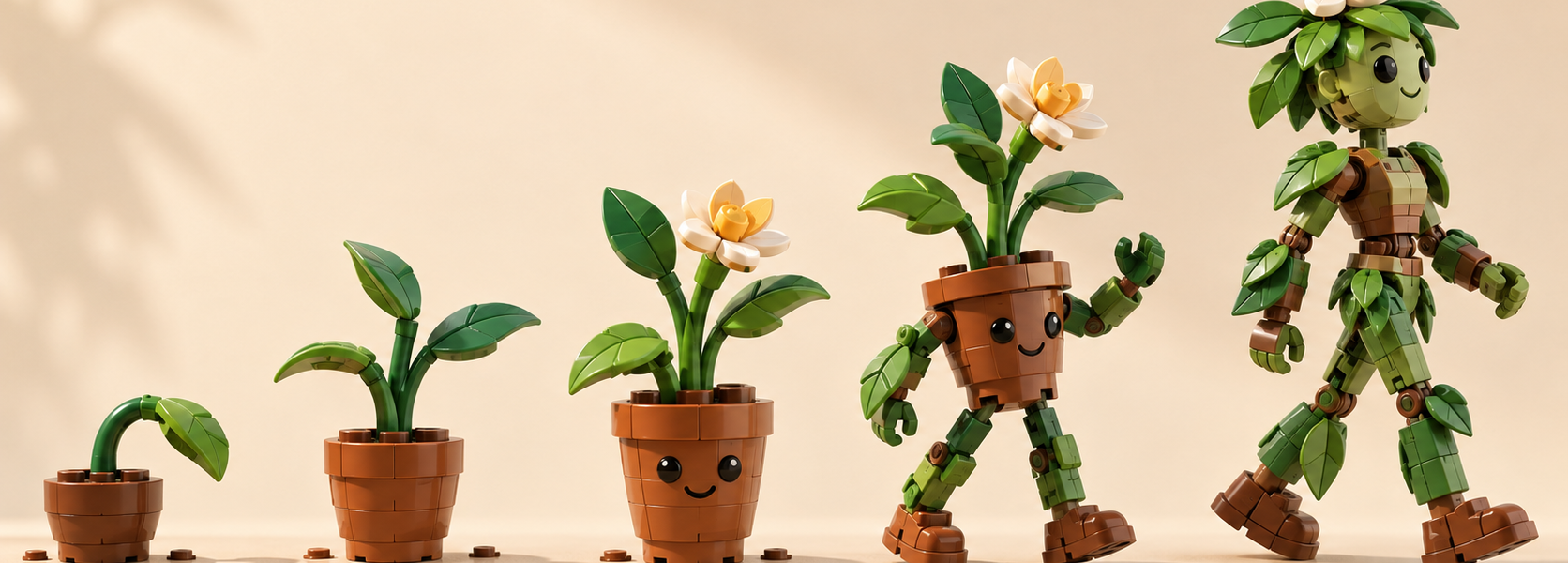
Instead of focusing only on botanical realism, LEGO is now producing smaller plant sets with faces, poses and personality. Happy Plants 10349 came first, followed by Rocking Plants 11506, and now Cozy Plants continues the pattern.
The interesting question is not whether these sets are cute. It is whether LEGO Botanicals is quietly developing a more character-driven branch of the collection.
Cozy Plants pushes the idea further
Cozy Plants 10371 contains 248 pieces, is rated 9+ and launches on 1 November 2026. The set includes peppermint and chamomile in two interchangeable pots.
The plants are still recognisable as plants, but LEGO gives the pots clear personalities. One is shown reading a book, another holding a cup of tea, and both have smiling faces.
That makes the model function as more than decorative greenery. It becomes a small scene with character, mood and a light narrative.
Happy Plants established the visual language
Happy Plants 10349, released in 2025, already introduced many of the same ideas. The 217-piece set is also rated 9+ and includes two plants in colourful pots with cartoon-like faces.
LEGO even describes one as standing and the other as sitting. That small detail matters because it shifts the product away from a static object and toward a character with posture.
The pots can also be swapped, introducing a simple form of customisation from the start.
Rocking Plants added motion and names
Rocking Plants 11506 develops the concept further. The 253-piece set is again aimed at builders aged 9+ and features two named plants, Lumi and Ellie.
The pots have faces, arms and legs, and their rounded bases allow them to rock when touched. LEGO also makes them compatible with Happy Plants, allowing builders to mix the plants and pots between sets.
This is a much bigger step away from traditional Botanicals realism. The plant remains decorative, but it is also interactive and collectible.
Three sets now share the same product language
Happy Plants, Rocking Plants and Cozy Plants have several notable features in common:
- a 9+ age rating,
- a relatively small build size,
- a lower entry price than larger Botanicals sets,
- two plants per box,
- colourful pots with faces,
- customisation or interchangeable elements,
- and a clear gifting and bedroom-decor appeal.
That is enough consistency to describe a clear design direction, even if LEGO has not officially named it as a separate subtheme.
The biggest change is personality
Traditional Botanicals sets usually aim to recreate the visual qualities of real flowers and plants. In this newer group, realism matters less than personality.
A pot can sit, rock, read or hold a drink. Faces, limbs and props do part of the storytelling.
The design therefore shifts from “a model of a plant” to “a plant as a character.” It is a subtle change in construction, but a major change in how the product is perceived.
The 9+ rating broadens the Botanicals audience
This is also important from an audience perspective.
Many of the best-known Botanicals releases have been strongly associated with adult builders and home decor. Happy Plants, Rocking Plants and Cozy Plants are rated 9+ and positioned as creative room decor, gifts and approachable builds for younger fans.
That means Botanicals is no longer limited to being an adult lifestyle category. It can also operate as a younger, more playful decorative line.
A lower price point changes how people buy them
These sets sit well below the cost of many large Botanicals displays. That lower entry point makes them easier to buy casually, easier to give as gifts and easier to collect in multiples.
This matters because character-driven products benefit from repetition. One cute plant is a decoration. Several compatible plants begin to feel like a collection.
If LEGO continues in this direction, Botanicals could end up with something resembling a small collectible character ecosystem—except the characters are plants.
Gift, decor and toy at the same time
This hybrid role may be the biggest strength of the concept.
For an adult, the sets can work as small desk decorations. For a child, they can be built, rearranged and personalised. For a gift buyer, they are relatively inexpensive, easy to understand and not tied to a movie or game license.
That last point is especially useful. A smiling plant requires almost no context. The appeal is immediate.
Is this officially a subtheme?
Not yet.
LEGO has not announced a separate named line grouping Happy Plants, Rocking Plants and Cozy Plants together. Calling them a subtheme is therefore an editorial interpretation, not an official classification.
Still, the repeated design pattern is becoming difficult to ignore. The same age target, similar format, compatible elements and increasing level of personification all point in the same direction.
Happy Plants introduced faces and poses. Rocking Plants added names, limbs and movement. Cozy Plants adds small everyday activities such as reading and drinking tea.
Botanicals may be splitting into two parallel directions
None of this means realistic flowers are going away.
A more plausible outcome is that Botanicals continues in two directions at once. One branch can keep producing larger, more realistic display models for adult interiors. The other can focus on smaller, cheaper and more playful character-driven builds for gifts, younger builders and casual collectors.
Cozy Plants matters because it strengthens that second direction. In LEGO Botanicals, a plant no longer has to look like a plant alone. Increasingly, it can behave like a tiny character too.