

How to Check the Condition of a Used LEGO Minifigure Before You Buy

When buying a used LEGO minifigure, it is easy to focus on one question: is it complete? But completeness and condition are two different things. A figure can have every correct part and still suffer from cracked plastic, loose joints, worn printing, discoloration, or damaged fabric accessories.
That distinction matters most with collectible figures, where condition can have a major impact on desirability and price.
Start with completeness, then judge condition
Before looking for damage, confirm what the minifigure is supposed to include: head, torso, legs, hair or headgear, cape, wings, or any other parts assigned to that specific catalogue entry.
BrickLink requires minifigures listed as minifigures to be complete. Incomplete examples should be split into parts or listed in another clearly described way. But completeness does not tell you whether the torso is cracked, the print is worn, or the joints are loose.
1. Inspect the torso around the hips and shoulders
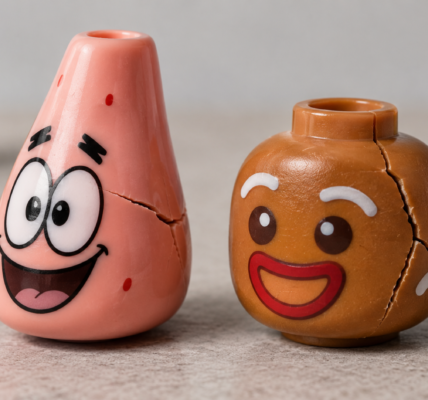
The lower edge of the torso and the areas around the arm sockets deserve close attention. Figures that have been assembled and disassembled repeatedly can develop stress marks or cracks in these locations.
A straight-on photo often hides this kind of damage. For a more expensive figure, ask for:
- a close-up of the lower torso edge from the front and back,
- side views around both arm sockets,
- a photo of the torso removed from the hips if the seller can do so safely.
A light surface mark is not the same as a structural crack. The second is much more important for long-term durability and collector value.
2. Check whether the arms, hands, and legs still hold position
An arm should stay where it is placed. If it drops immediately under its own weight, the joint may be heavily worn. The same principle applies to hands: they should rotate, but they should not fall out with minimal contact.
This is difficult to judge from still photos, so ask the seller directly: Do the arms, hands, and legs hold their position properly?
Minor looseness may be acceptable on an inexpensive play figure. On a high-value collectible, it is something you should know before paying.
3. Look at the hips and legs from every side
Do not judge the legs from the front alone. Check the sides, rear, and the connection points around the hips.
Look for cracks, deep scratches, damaged corners, and heavy surface wear. If the figure has printing on the hips or legs, inspect the edges of those prints closely because they often reveal handling wear before the centre of the graphic does.
4. Worn printing matters more than tiny surface marks
Printing can be a large part of what makes a minifigure distinctive. This is especially true for characters with unique torso designs, faces, arm printing, or detailed leg decoration.
When reviewing photos, check for:
- missing sections of lines or details,
- wear in the centre of the torso print,
- facial print loss,
- scratches running through the artwork,
- uneven gloss suggesting heavy surface wear.
BrickLink says excessive wear, discoloration, excessive scratches, and similar issues should be disclosed on used items. That does not mean every micro-scratch makes a figure poor condition. The key question is whether the wear is noticeable and significant to a buyer.
5. Discoloration can be difficult to judge from one photo
Older LEGO parts can shift in colour over time. Lighting can make that hard to assess online.
For a more expensive minifigure, ask for a photo in neutral daylight, ideally next to another part in the same nominal colour. This gives you a better reference than a single image taken under warm indoor lighting.
Even then, use caution. Cameras, white balance, and screens can all change how colours appear.
6. Capes and fabric accessories need a separate inspection
A cape can be present and therefore technically complete, while still being heavily creased, frayed, stained, or torn around the neck holes.
Ask for fabric pieces to be photographed separately and laid flat. Check:
- the outer edges,
- mounting holes,
- creases,
- tears,
- stains or discoloration.
The same applies to cloth skirts and other flexible accessories.
7. Confirm that the figure has the correct component variants
A minifigure may look correct at first glance but be assembled from parts taken from several different examples.
That is not automatically a problem if every component is correct for the catalogue entry. But with collectible figures, it is worth checking details such as similar head prints, hair pieces in near-identical colours, or torso and leg variants that changed between releases.
If you are unsure, compare the figure against a BrickLink inventory or another reliable reference catalogue.
What photos should you ask for before an expensive purchase?
One front-facing photo is not enough for a valuable used figure. Ask for at least:
- the full front view,
- the full rear view,
- both sides of the torso,
- a close-up of the hips and lower torso,
- a close-up of the head and face printing,
- separate photos of capes or fabric accessories when present.
The higher the price, the more reasonable it is to expect clear documentation of areas that are hidden in the main listing photo.
Five questions worth sending the seller
- Are there any cracks in the torso or legs?
- Do the arms, hands, and legs hold their position properly?
- Is there any visible wear or scratching on the printing?
- Is there discoloration, marker, glue residue, or other permanent staining?
- Are all components correct for this exact catalogue entry?
Written answers can also be useful if the item arrives in noticeably worse condition than described.
Used does not mean damaged
This is the most important distinction in the guide. BrickLink describes used minifigures as previously used items that remain in good, usable condition. Excessive wear, discoloration, major scratches, and similar defects should be disclosed.
So the label Used should not be treated as permission for any level of damage. Normal handling marks may be expected, but more serious flaws should be stated clearly.
A simple editorial condition scale
The following scale is not an official BrickLink grading system. It is a practical editorial framework for buyers:
Very good: no cracks, joints hold well, printing is intact, and there is no obvious discoloration; only very light handling marks.
Good: normal visible signs of use, light scratches, or minor print wear, but no major structural damage.
Acceptable: obvious play wear, more noticeable print loss, looser joints, or visible discoloration; the price should reflect the condition.
Poor: cracks, heavily worn printing, major discoloration, damaged fabric parts, or other defects that affect appearance or durability.
Used LEGO minifigure checklist
- Confirm the exact catalogue version.
- Check that every required component is present.
- Inspect the torso around the hips and arm sockets.
- Check the sides and rear of the legs.
- Review face, torso, and leg printing closely.
- Ask whether the arms, hands, and legs are loose.
- Check for discoloration under neutral lighting.
- Inspect capes and fabric accessories separately.
- Ask for extra photos before buying a high-value figure.
The best way to evaluate a used minifigure is to separate two questions: Is it complete? and What condition is it actually in? Only after answering both can you judge whether the asking price makes sense.