

AI Can Sort 100,000 LEGO Bricks a Day. Could Automation Change the Used LEGO Market?

The used LEGO market has a simple scaling problem: the larger the mixed lot, the more labour it takes to identify, sort, inspect and recombine the parts into useful inventory or complete sets.
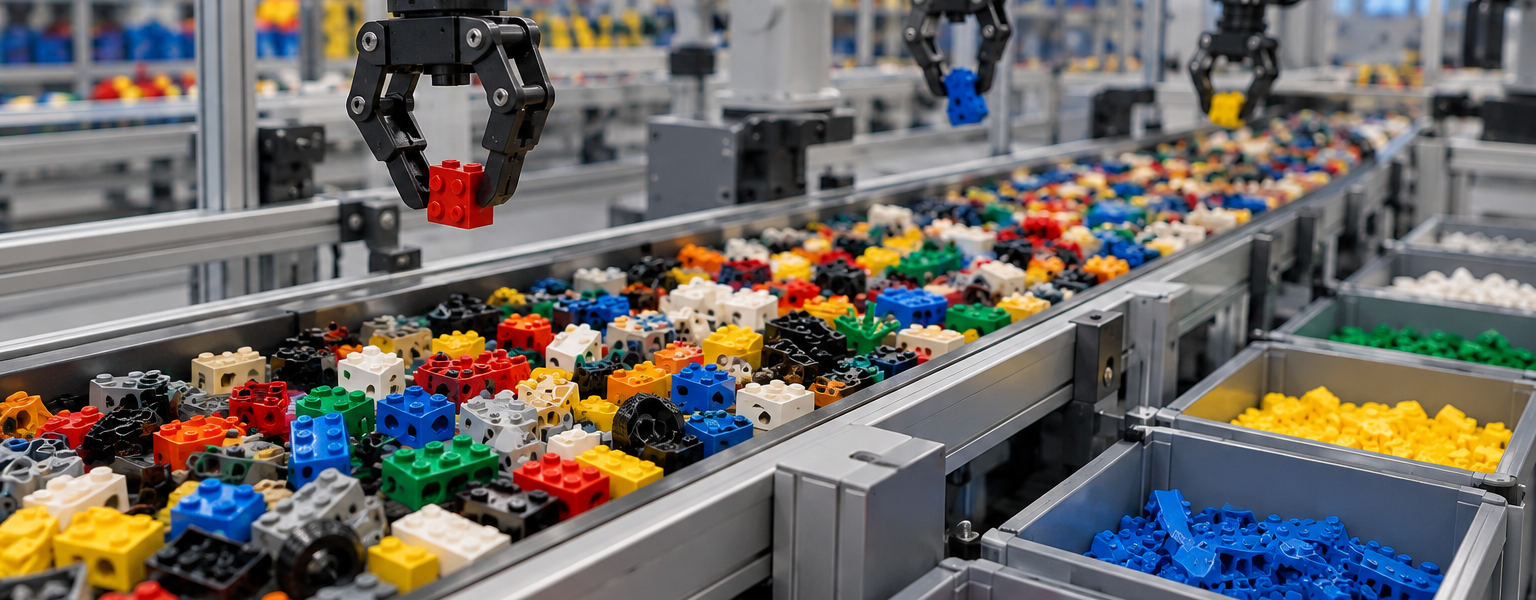
That is exactly the problem UK-based WeBuyBricks is trying to tackle with Brick-o-Matic. According to a recent report in The Times, the system uses AI-assisted cameras and automated sorting, with a claimed throughput of up to 100,000 elements per day. The same report says the company has inventoried around 14 tonnes of bricks and returned 25 million pieces to circulation.
The real cost is not the brick — it is the labour around it
A mixed box of LEGO has value, but most of that value is locked behind work. Someone has to identify the shapes, colours and variants, remove damaged or non-LEGO pieces, and then decide whether the recovered stock is best sold as parts, rebuilt into sets, or used to fill gaps elsewhere.
WeBuyBricks already operates across that spectrum. The company buys complete sets, incomplete sets and bulk bricks by weight. That matters because Brick-o-Matic is not trying to invent a market from scratch. It is being developed inside an existing resale workflow where labour efficiency directly affects margins.
How Brick-o-Matic changes the first stage of the process
The system described by The Times uses machine vision to recognise pieces and automated handling to separate them. The company also says damaged and non-genuine parts are removed during processing.
The significant point is not simply that AI can identify a LEGO element from an image. Similar computer-vision tasks have been demonstrated before. The important step is combining recognition with continuous physical throughput.
At small scale, identifying a part is a hobby task. At industrial scale, the value comes from moving thousands of parts through the system quickly and consistently enough that manual sorting is no longer the main bottleneck.
100,000 pieces a day changes the economics
A claimed throughput of 100,000 elements per day moves the conversation away from hobby-room sorting and into industrial processing.
That could make a major difference to lots that are currently too time-consuming to sort by hand. A mixed batch with low per-piece value may still become worthwhile if the cost of identification and separation drops far enough.
This does not mean every bin of loose bricks suddenly becomes a complete retired set. It means the first and most repetitive stage of recovery may become cheaper.
The real opportunity is recompleting sets, not just sorting parts
Sorting only creates structured inventory. The more interesting value appears when that inventory can be matched against set inventories.
If a company knows it has hundreds of specific plates, slopes, windscreens and printed elements in stock, software can compare that inventory against thousands of set lists and identify which retired sets could be rebuilt with relatively few missing parts.
That is where automation may have the strongest effect on the used market: turning anonymous bulk material into complete or near-complete products with much higher resale value.
Human inspection still matters
Computer vision does not solve every collecting problem.
There are still difficult cases involving:
- worn or partially erased prints,
- stickers versus factory printing,
- hairline cracks and joint wear,
- minifigure condition,
- subtle mould variants,
- capes, cloth parts and instructions.
WeBuyBricks itself says used sets are checked by staff, which is important. Machines are best at repetitive, high-volume classification. Collector-grade condition remains much harder to standardise.
Could automation increase the supply of used sets?
This is the most plausible market effect, but it remains an inference rather than a proven outcome.
If large mixed lots become cheaper to process, more material could return to the market as identified parts or rebuilt sets instead of being sold simply as bulk.
That would effectively blur the line between three categories that are currently treated very differently: complete sets, incomplete sets and loose mixed bricks.
Material purchased as bulk could later become the source of missing parts for hundreds of different sets.
Will this make retired LEGO cheaper?
There is no evidence yet that automated sorting will cause broad price drops.
Supply is only one factor. Prices also depend on demand, minifigure rarity, condition, completeness, packaging, instructions and the popularity of the theme.
Automation may improve availability at the margins, but it does not automatically erase scarcity. Rare figures, unusual prints and high-condition complete sets will still be constrained by how many actually exist.
This is becoming a broader category, not a one-off experiment
WeBuyBricks is not alone. Sort A Brick has also been developing AI-assisted sorting services that identify loose LEGO elements and group them into buildable sets.
That matters because it suggests automated sorting may become a service category of its own, especially in Europe and the UK, where large second-hand markets already exist and where labour costs make manual processing expensive.
The biggest change may be business-model economics
The headline technology is AI recognition, but the more important shift may be economic.
If automation makes it worthwhile to recover material that was previously too expensive to sort, the second-hand ecosystem could become more efficient from end to end: acquisition, identification, inventory, set recompletion and resale.
That does not mean collectors disappear from the process. A more likely outcome is a division of labour: machines handle high-volume repetitive sorting, while humans remain responsible for condition, tricky variants and collector-grade verification.
That is why Brick-o-Matic is more interesting as a change in the economics of used LEGO than as a flashy machine on its own.