
James May Built a Full-Size LEGO House. Why Did It Have to Be Dismantled?

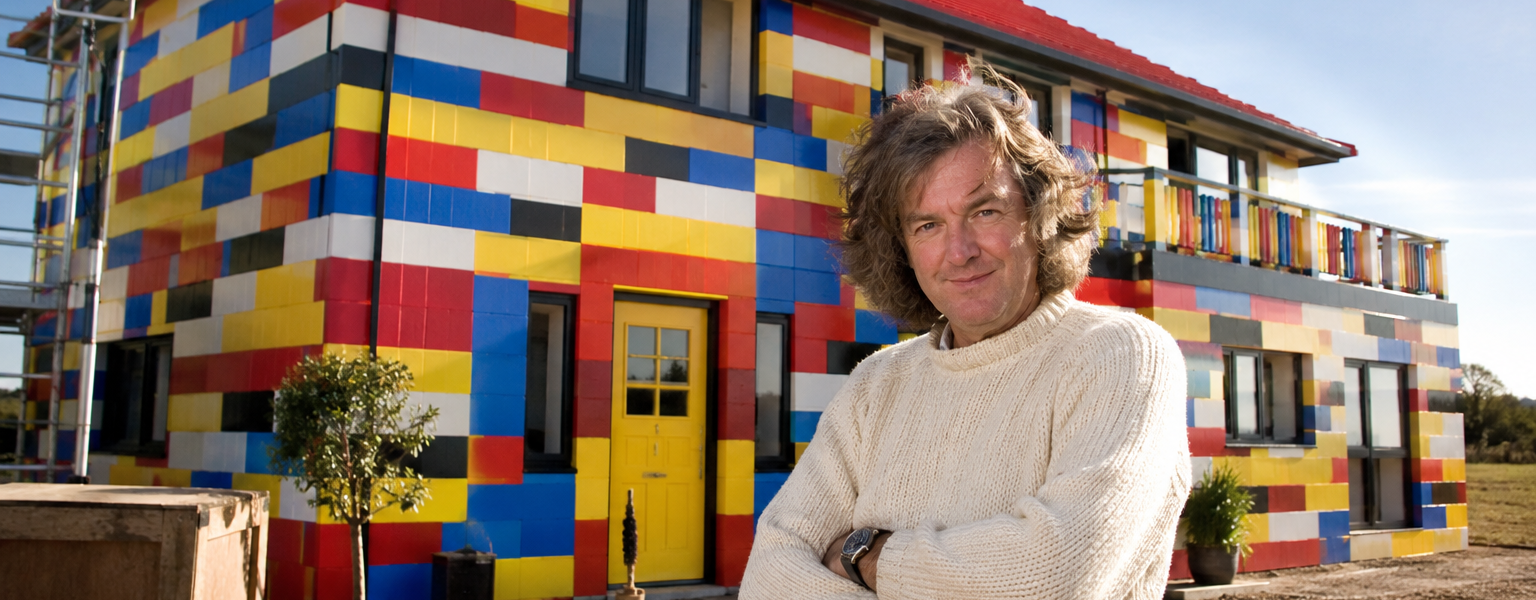
What happens when a television crew takes the idea of building a LEGO house literally? In 2009, Top Gear presenter James May and a team of designers, builders and volunteers attempted just that for James May’s Toy Stories. Their result was a house big enough to enter, furnish and sleep in. It was also temporary, required more engineering than its playful appearance suggested, and ended up being dismantled.
From a classic toy to a full-scale television challenge
James May’s Toy Stories explored what familiar toys could achieve when taken far beyond their usual scale. The LEGO house project was built at Denbies Wine Estate near Dorking in Surrey, England. This was not a tabletop model or a conventional house with a decorative brick façade. Its walls and much of its interior drew on the same interlocking plastic system used by LEGO enthusiasts, but on an altogether different scale.
How many LEGO bricks were actually used?
The widely repeated figures are not identical. Guinness World Records lists 2.4 million bricks in its account of the life-size house. Programme distributor Hat Trick International says 3.4 million bricks were supplied. A contemporary ArchDaily report gave a figure of 3.3 million bricks used, while an interview with the project architect in Computer Graphics World refers to more than 3 million. Supplied materials and pieces incorporated into a finished structure need not be the same measurement. Without a full materials reconciliation, there is no sound basis for declaring one figure the definitive total.
Guinness gives the building’s approximate dimensions as 4.69 metres high, 9.39 metres long and 5.75 metres wide — roughly 15.4 feet high, 30.8 feet long and 18.9 feet wide. It also reports that approximately 1,200 volunteers helped. Those numbers convey how much real-world organisation sat behind the whimsical result.
The engineering detail many retellings miss
The most revealing account is not a publicity photograph but an interview with architect Barnaby Gunning published by Computer Graphics World in 2010. Gunning described designing with 3D software and evaluating LEGO-based structural components, including load-bearing beams. The building was an experiment in how a system meant for small-scale play behaves when it must support people, furniture and full-sized rooms.
Yet it would be misleading to call the project a house made entirely from LEGO with no other structural assistance. According to Gunning, the insurer required a parallel wooden frame. Guinness also records timber support. That qualification does not make the project less ambitious; it reveals the difference between an inventive television stunt and a certified, permanently habitable building.
Could James May actually stay there?
Yes: May spent a night in the completed house. The team also created furnishings and bathroom facilities. But fitting a structure with recognisable domestic features does not automatically make it weatherproof or practical. Contemporary accounts mention leaking, one of the predictable limitations of assembling a full-size enclosure from interlocking toy bricks. It was a television experiment, not a substitute for normal building materials or construction standards.
Why the house did not survive
Once filming was over, keeping a house on a working wine estate posed a problem. The site needed to return to normal use, and relocating the heavy, complex structure was expensive. Reports at the time discussed a possible move to LEGOLAND, but that option was not realised. The house was ultimately dismantled. Its disappearance was a logistical and financial outcome, not evidence that the structure had suddenly collapsed.
What the project still teaches us
There is an appealing contradiction at the heart of James May’s LEGO house. It looked like the ultimate expression of a child’s imagination, but making it real required professional design, structural tests, insurance negotiations, volunteer coordination and a plan for what would happen when filming ended. As a piece of television history it is memorable; as a building experiment it is an unusually clear example of how much engineering can hide behind something that looks simple.
Sources and further reading