
How to Check Whether a Used LEGO Set Is Really Complete Before You Buy It

Buying used LEGO is often the best way to find retired sets or reduce cost, but completeness is one of the biggest risks. A set can look finished in photos while still missing a valuable minifigure accessory, an internal element, a stickered part, or a hard-to-replace printed piece.
The safest approach is to treat completeness as something you verify step by step.
Start with the exact set number
Make sure the listing matches the exact set number and, where relevant, the correct variant. Similar names, regional versions, and older releases can have different inventories.
BrickLink and Rebrickable both provide set inventories that are far more useful for verification than a seller’s estimated part count.
Inventory matters more than the box piece count
The official piece count is not enough to confirm a used set. Inventories can include spare parts, alternates, and version-specific details that cannot be checked by simply counting everything in one pile.
For expensive or retired sets, compare by part number and color, especially for distinctive or rare elements.
Check minifigures separately
For many retired sets, minifigures represent a significant share of collector value. A set can be physically buildable while still being incomplete because one character is missing a head, torso, cape, hairpiece, helmet, or accessory.
Ask for clear photos of each minifigure and compare the complete figure configuration with a reliable catalog.
Printed and stickered parts deserve extra attention
A common plate is usually easy to replace. A rare printed element may not be. Sticker condition matters too: a set can contain every structural part but look very different from the original if stickers are missing, damaged, or badly applied.
Ask whether stickers are present and whether they are original to the set.
Instructions and box: define what “complete” means to you
For a builder, the absence of a box may be irrelevant. For a collector, the original instructions and packaging can matter. That is why the word “complete” should be clarified before purchase.
Are you buying a complete build, a complete set with all minifigures, or a collector-complete package including instructions and box?
Spare parts are a separate question
New LEGO sets often include small spare elements. Their absence in a used set does not always prevent the model from being complete in a practical sense, but some collectors still care about them.
If factory-level completeness matters, check whether the reference inventory distinguishes regular and extra items.
Ask for close-up photos of high-risk items
For higher-value purchases, request photos of minifigures, printed parts, transparent elements, electronics, chrome or metallic finishes, and other components that are expensive or prone to visible wear.
A wide photo of the assembled model may not reveal cracked minifigure torsos, scratched windscreens, substituted colors, or hidden internal replacements.
Watch for color substitutions
A seller may rebuild a set using the correct part shape but the wrong color, especially for internal pieces. That may be perfectly acceptable for someone who only wants the model to display or play with, but it is not the same as matching the original inventory.
Price the missing parts before you buy
If the set is incomplete, check replacement prices before assuming the discount is worthwhile. The cost is not just the sum of the cheapest parts: rare pieces may come from different sellers, creating multiple shipping charges.
An apparently cheaper incomplete set can end up costing more than a complete example once all missing pieces are sourced.
Used LEGO buying checklist
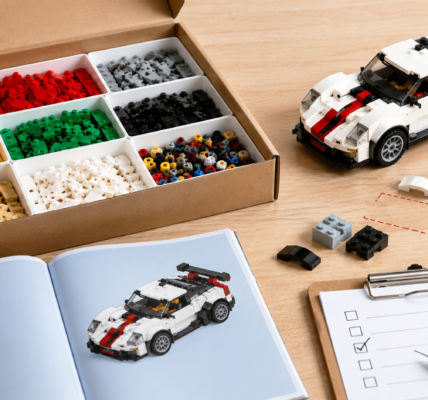
- Confirm the exact set number and variant.
- Compare the contents with BrickLink or Rebrickable inventory.
- Verify every minifigure and accessory.
- Check printed parts and sticker condition.
- Clarify whether instructions and box are included.
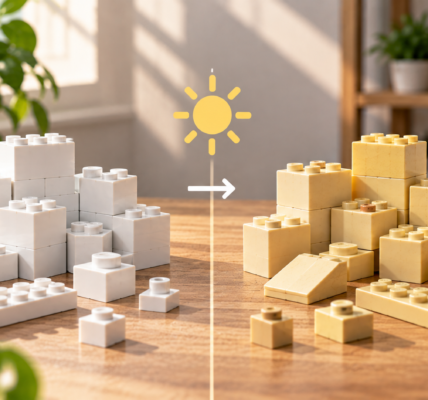
- Ask about substitutions, discoloration, cracks, and wear.
- Request close-up photos of valuable or fragile elements.
- Estimate replacement cost including shipping.
The key takeaway
On the used LEGO market, “complete” should be the start of verification, not the end. The older and more expensive the set, the more worthwhile it is to spend a few minutes checking inventories and high-value components before paying.