

Buying used LEGO can save a lot of money, especially on retired sets, but the word complete is not always used consistently. One seller may mean that the model itself can be built. Another may include every minifigure, accessory, instruction booklet and original box.
Before paying, it is worth checking the listing against reliable reference material instead of relying on the description alone. A few minutes of verification can prevent an expensive mistake.
Start by confirming the exact set number
The first step is identifying the set correctly. Similar-looking models can exist in multiple versions, with different piece counts, minifigures or details. LEGO explains that the set number can be found on packaging and building instructions.
If the seller has not listed the set number, ask for a photo of the box, instruction cover or another detail that confirms the exact product. Without that, you may end up comparing the listing with the wrong inventory.
Use the official instructions as a visual reference
LEGO makes building instructions available online and they can be searched by set number. For a built model, the final instruction pages are useful for comparing the seller’s photos with the completed design.
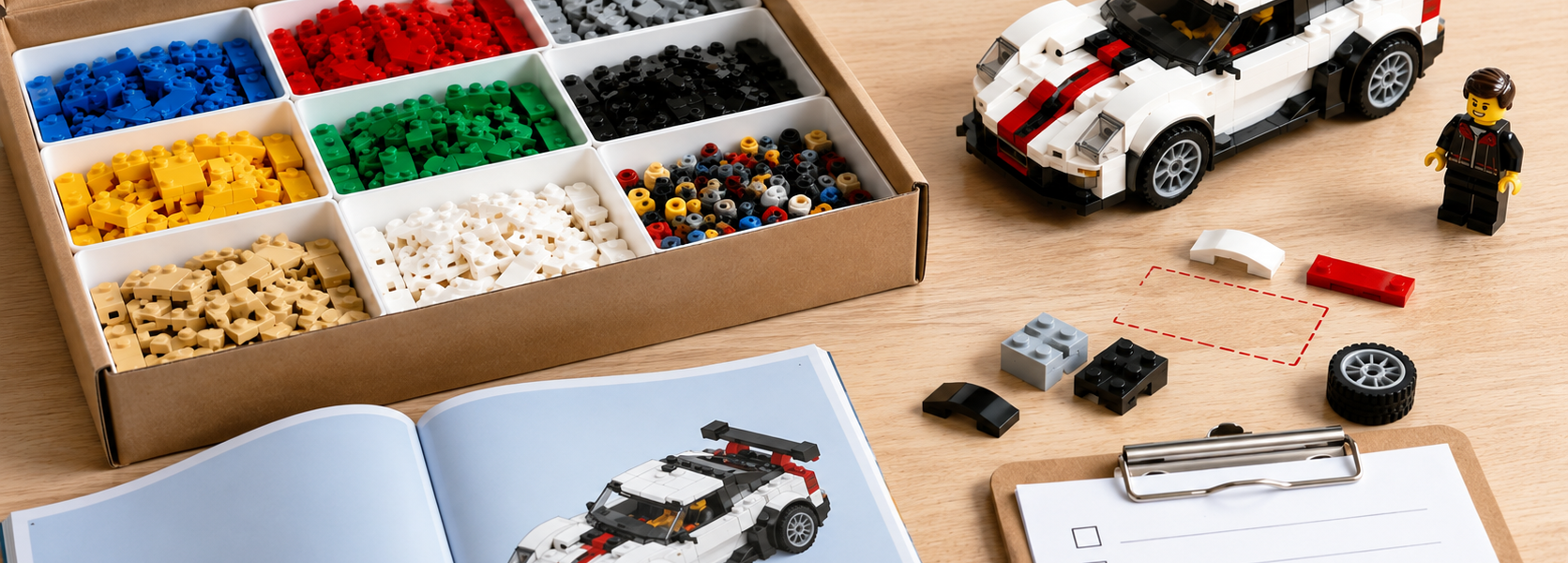
Missing wheels, windows, roof sections, panels or decorative elements are often easier to spot visually than by counting every brick.
Check the inventory, not just the total piece count
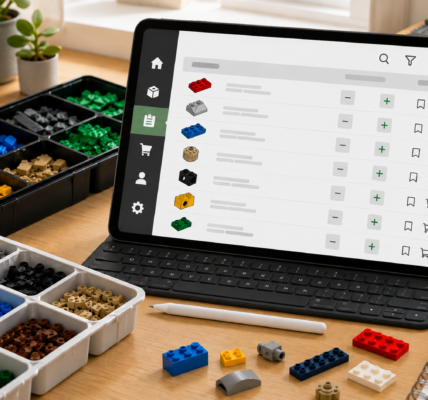
A full inventory is more useful than the headline piece count. BrickLink and Brickset can help identify the parts, minifigures and accessories associated with a set.
The expensive omissions are often not ordinary bricks. A missing exclusive minifigure, printed panel, large windshield, unusual animal, specialty element or rare color can matter far more than several common plates or bricks.
Verify minifigures separately
Minifigures deserve their own check. Confirm not only that the right characters are present, but that they have the correct heads, torsos, legs, hairpieces or helmets and key accessories.
Used collections are often mixed over time, so a figure can look broadly correct while containing parts from a different version. Close-up photos are especially useful for higher-value sets.
Inspect prints, stickers and unique parts
Printed pieces and stickers can have a major effect on condition and value. A set may be structurally complete while still having missing, damaged or badly applied stickers.
Ask for clear photos of stickered and printed parts when condition matters to you. It is also worth checking distinctive large elements, capes, helmets, weapons and accessories that may be difficult or expensive to replace later.
Ask what the seller means by “complete”
One simple question can prevent confusion: does complete mean all parts needed to build the model, or does it also include the instructions, box and extras?
The box and paper instructions are not required to build the model, but collectors may value them and they can affect the price of older sets. Make sure the listing matches what you personally expect from a complete copy.
Request the right photos before paying
For an expensive set, do not rely on a single photo of the assembled model. Ask for:
- close-ups of all minifigures,
- photos of printed and stickered elements,
- photos of large or unusual parts,
- multiple views of the completed model or the sorted parts,
- photos of the instructions and box if they are included.
The more valuable the set, the more worthwhile this extra check becomes.
Price missing parts before deciding
A set with a few known missing pieces can still be a good purchase, but only if the cost of replacing them is reasonable. LEGO provides part identifiers such as element and design numbers, and replacement parts can be sourced through Pick a Brick or secondary-market platforms.
One important distinction: LEGO’s free missing-parts service is intended for parts missing from a new set. It should not be treated as a way to complete a second-hand purchase for free.
For older sets, compare more than one source
Online inventories are extremely useful, but older sets can have production variations, substitutions or incomplete historical data. Brickset notes that inventories based on LEGO Customer Services data should be treated as a guide.
If the set is rare or expensive, compare at least two inventory sources and check the official instructions as well.
Used LEGO completeness checklist
- Set number: is the exact set clearly identified?
- Instructions: does the model match the official build?
- Inventory: do the listed parts and quantities line up?
- Minifigures: are the correct figures and accessories included?
- Prints and stickers: are they present and in acceptable condition?
- Unique parts: are any expensive or hard-to-find pieces missing?
- Box and paper instructions: are they included if they matter to you?
- Photos: has the seller shown enough detail to verify the listing?
- Replacement cost: does the purchase still make sense after replacing any missing parts?
The key rule is simple: do not treat “complete” as proof. Confirm the set number, compare the inventory and instructions, inspect the minifigures and check the cost of any missing parts before you buy.