
One Minifigure, One Set: Alien Android’s Quiet Collector Afterlife

Not every collectible minifigure starts out as something obviously special. Sometimes the most interesting story comes from a character that simply appeared once and then disappeared from the catalogue.
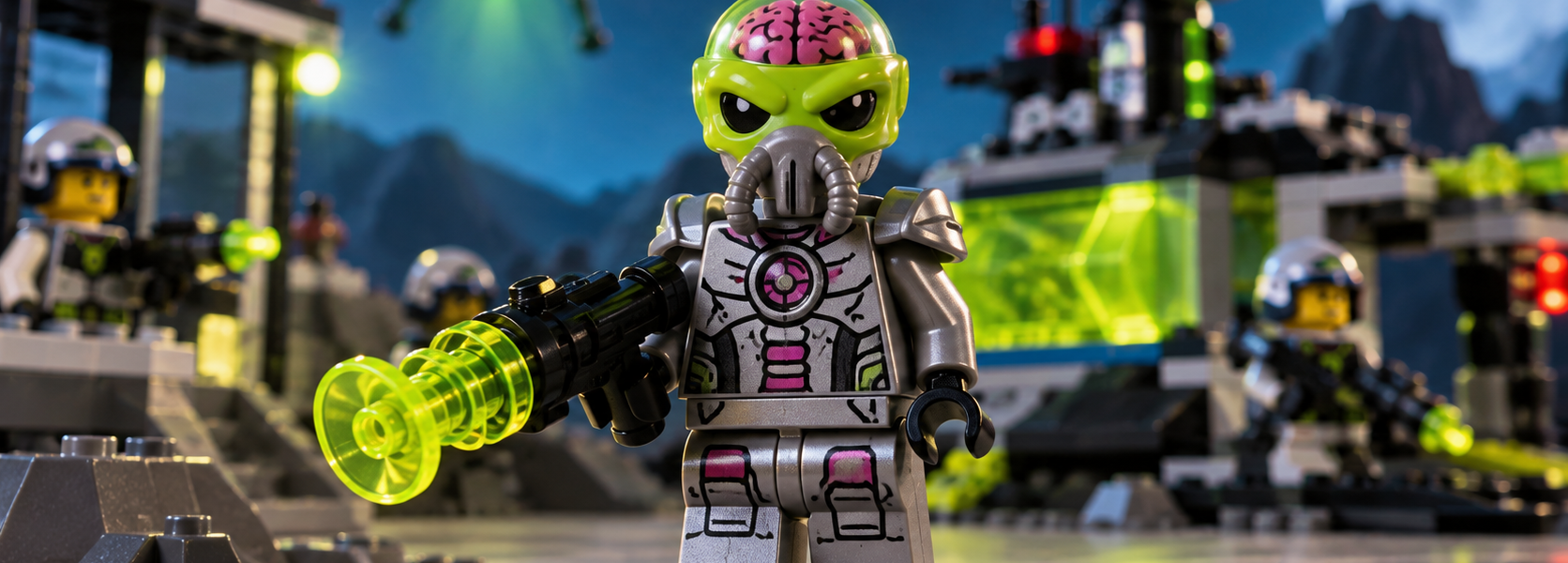
Alien Android ac012 is a good example. Released in 2011 as part of LEGO Alien Conquest, the minifigure appeared only in 7066 Earth Defense HQ.
One set was enough
Earth Defense HQ was one of the larger Alien Conquest releases, with 879 pieces and five minifigures according to Brickset. Alien Android was one of them, but unlike characters reused across several sets, this figure never received a second appearance.
That matters more with time. A minifigure used repeatedly can remain relatively easy to find for years because thousands of copies enter the secondary market through multiple sets. A figure tied to a single release has a much narrower supply history.
Availability matters as much as design
Alien Android is not especially famous, and that is part of what makes it interesting. Its collector appeal is tied less to a major license or iconic character status and more to distribution.
Current secondary-market listings place new examples around the mid-$30 range, although asking prices move constantly and do not guarantee actual sale value.
The useful lesson is not the number itself. It is how a one-set minifigure can become harder to source simply because there was never another production route for collectors to rely on.
Alien Conquest adds historical context
The broader theme also helps. Alien Conquest was a short-lived original LEGO theme from 2011 rather than a long-running evergreen line. Today, it reads as a closed chapter in LEGO history, which gives its more distinctive minifigures extra context for collectors.
That kind of context often matters more than raw rarity. A figure connected to a short, self-contained theme can become a small artifact of a specific design era even if it was never marketed as exclusive.
A small example of how collector memory works
Alien Android ac012 is not one of LEGO’s best-known minifigures, but that is precisely why the story works. It shows that collector interest can grow around ordinary-looking figures when production history, theme longevity and one-time availability line up.
Fifteen years later, the interesting part is not that the figure is expensive. It is that a single appearance in one set was enough to give it a much longer afterlife than most buyers in 2011 would have expected.